Week 18 – October 8 & 10, 2026
Delivery dates: October 8 & 10, 2026
The Thanksgiving bin — and the last one of the season. Week 18 brings Beets, Lettuce Mix, Purple Stripe Garlic, Carrots, Broccolini, Potatoes, Kohlrabi, Brussels Sprouts, Butternut Squash, Shallots, Sage, and Sweet Potatoes. Enjoy the fresh things while they’re beautiful, let some of the storage vegetables become Thanksgiving food, save what can wait — then turn the leftovers into an easy supper afterward.
Use These First
Section titled “Use These First”Use These First
Your vegetables don't read this list. Check everything when you unpack your bin — anything bruised or showing signs of deterioration moves to the front of the line. This is a storage guide, not a meal order — and with Thanksgiving in the middle of the week, your order will be your own.
Enjoy early — Sage · Lettuce Mix · Broccolini · Brussels Sprouts
Next — Kohlrabi · Carrots (tops removed) · Beets (greens removed)
No rush — Potatoes · Sweet Potatoes · Butternut Squash · Purple Stripe Garlic · Shallots
Use These First is about quality, not a countdown. Items in the same group won’t all keep for exactly the same time. Reach for the sage, lettuce, and other fresh vegetables early. Fresh sage in particular is at its best in the first few days, which is handy, because the gnocchi uses it right away. The roots, squash, garlic, and shallots can comfortably wait.
Nearly half this bin is storage crops. Potatoes, sweet potatoes, butternut squash, garlic, and shallots will happily wait out Thanksgiving in a cool, dry spot — and beets, kohlrabi, and carrots hold well in the crisper. You don’t need to use everything this week, and the plan below doesn’t try to.
This Week, Handled
Section titled “This Week, Handled”Let us take a few decisions off your plate.
Three suppers, one grocery list, and one easy dish to bring to someone else’s table. None of the suppers taste like a second Thanksgiving dinner — that’s on purpose. Pick one, two, or all three.
Designed for about 4 people. Adjust quantities for your household.
Your Thanksgiving, Your Order
This Week's Shortcut
Your Thanksgiving, Your Order
This Week's ShortcutThe three suppers don’t have to happen in order. Fit them around your weekend:
- Picking up Thursday? Make the gnocchi Thursday or Friday while the lettuce is at its best. Thanksgiving happens. Cottage pie or curry afterward.
- Picking up Saturday, with dinner tonight or tomorrow? Get the sage, lettuce, broccolini, and Brussels sprouts into the fridge, and leave everything else for later. Gnocchi early next week.
- Bringing a dish to someone else’s dinner? See Bring This to Thanksgiving for three options, from garlic mashed potatoes to a colourful roasted side.
- Hosting? The bin can help: potatoes for mash, sage for the stuffing or gravy, the lettuce for a salad. If you’d rather put the broccolini and the small bag of Brussels sprouts on the holiday table, roast them with a sliced shallot — the gnocchi can wait or be skipped.
- No turkey, or no Thanksgiving at all? The curry stands completely on its own, and the cottage pie works just as well with ground beef, lentils, or white beans.
Early in the Week: Fresh Things First
Section titled “Early in the Week: Fresh Things First”The lettuce mix, broccolini, and Brussels sprouts are at their most appealing right after pickup, so this supper comes first. It’s quick, a little special, and nothing like the squash pastas of recent weeks.
Our Brussels sprouts were planted late, so expect a small bag this week. This recipe is built for exactly that: a small amount of sprouts alongside the broccolini is all it needs.
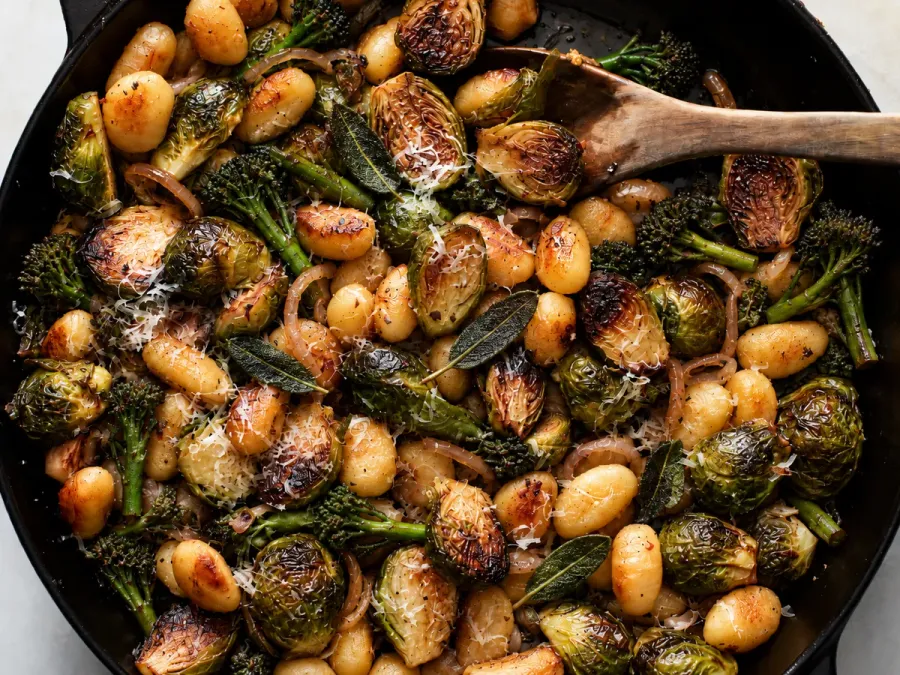
Brown-Butter Sage Gnocchi with Broccolini & Brussels Sprouts
Uses: Broccolini · Brussels Sprouts · Shallots · Purple Stripe Garlic · Sage · Lettuce Mix (on the side)
No boiling needed for shelf-stable gnocchi. The vacuum-packed kind from the pasta aisle crisps up beautifully in a skillet, straight from the package — a glance at the package is worth it, but skillet-only is a legitimate method, not a shortcut. Heat a generous drizzle of oil in your largest skillet (non-stick or cast iron) over medium-high heat. Add about 1 lb (500 g) of gnocchi in a single layer and break up any that are stuck together. Let them sit for a few minutes to brown, then toss every few minutes until golden and crisp outside and soft and hot all the way through — usually 8–12 minutes, depending on your pan and the brand. Bite one to check. Transfer to a plate.
Trim and halve the Brussels sprouts, and cut the broccolini into bite-sized pieces. Add a little more oil to the same pan, then the sprouts, cut-side down, and the broccolini. Cook without stirring for 3 minutes to brown, then add 2–3 tablespoons of water and cover for 2 minutes to steam them tender-crisp.
Uncover and add a thinly sliced shallot and 2 sliced garlic cloves. Cook for a minute or two, until the shallot softens. Push the vegetables to the side, add 4 tablespoons of butter to the empty space, and let it foam. Once it smells nutty and turns light brown — about 2 minutes, so watch it closely — add a small handful of sage leaves and let them crisp for 30 seconds.
Return the gnocchi to the pan and toss everything together. Finish with the zest and juice of half a lemon, a big handful of grated Parmesan, salt, and plenty of black pepper. Serve with the lettuce salad below.
About the garlic: Purple Stripe is a hot, strong variety, and its bite shows up most in quick-cooked dishes like this one. If you still have Music garlic from earlier in the season and want a gentler flavour, it’s a good choice here.
Even a small bag of Brussels sprouts is plenty here — the broccolini carries the dish.
Simple Lettuce Mix Salad
Simple Lettuce Mix Salad
Squeeze the other half of the lemon into a large bowl. Whisk in a teaspoon of Dijon mustard, a pinch of salt, and about 3 tablespoons of olive oil. Add the lettuce mix and toss just before serving, so the leaves stay crisp.
Optional: a few thin matchsticks of kohlrabi add a cool crunch next to the rich gnocchi. Totally optional — kohlrabi has its own place below in These Can Wait.
Frozen gnocchi? Follow the package directions. Many frozen brands need a quick boil first; drain them well and pat them dry before they go into the pan.
Whenever You Need It: Something Completely Different
Section titled “Whenever You Need It: Something Completely Different”The butternut squash keeps for weeks, so this supper can come whenever suits you — before Thanksgiving, after it, or next week. It’s warm, golden, mildly spiced, and made in one pot.
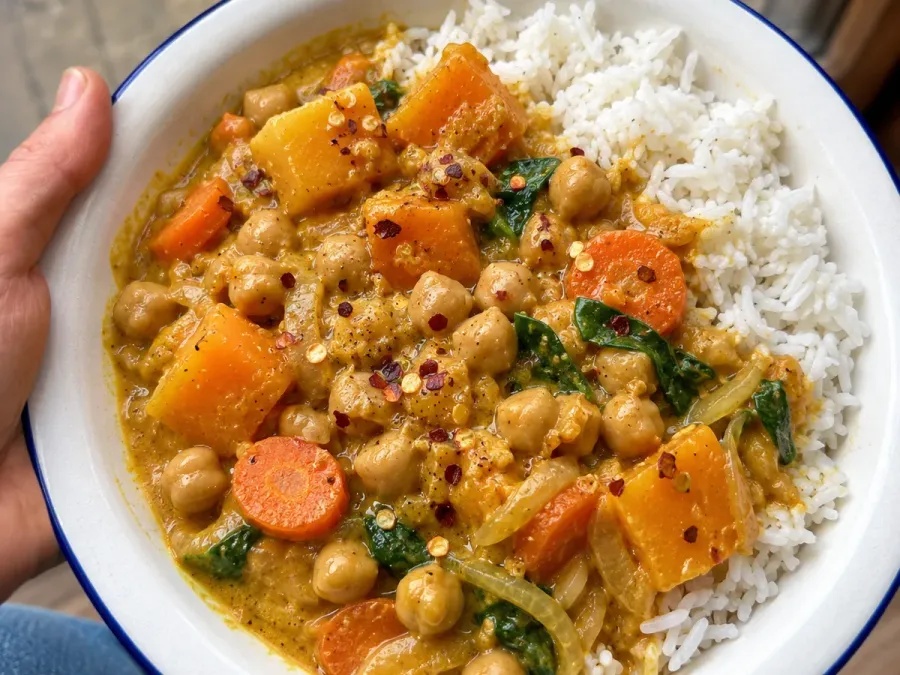
Golden Butternut, Carrot & Chickpea Coconut Curry
Uses: Butternut Squash · Carrots · Shallots · Purple Stripe Garlic
First, choose your squash route. Either one works — pick whichever suits your hands and your kitchen.
Route A — peel and cube it raw. If you’re comfortable handling a raw squash: cut off the stem and base so it sits flat, then cut the narrow neck away from the round bulb. Peel both pieces with a vegetable peeler, halve the bulb, and scoop out the seeds. Cut into ¾-inch cubes — you want about 4 cups. Have a microwave? Pierce the skin a few times and microwave the whole squash for 2–3 minutes first; it softens the skin and makes peeling easier.
Route B — don’t fight with it. If peeling a hard raw squash is a struggle, roast it with the skin on instead. If you can cut it safely, halve it lengthwise, scoop out the seeds, and roast cut-side down on a lined, lightly oiled sheet pan at 400°F for 40–50 minutes, until very soft. If cutting it raw is hard too, roast it whole: pierce it deeply in several places all over with a sharp knife (this lets steam escape — don’t skip it), set it on a lined pan, and roast at 400°F for about 60–75 minutes, until a knife slides easily into the neck. Let it cool for 15 minutes, then halve it — it’ll cut easily now — scoop out the seeds, and scoop the flesh away from the skin. Either way, roast it ahead while the oven is on for something else, or the night before, and the curry itself stays quick.
Make the curry. In a large pot or deep pan, heat 2 tablespoons of oil over medium heat. Add 2 sliced shallots and cook for 3–4 minutes, until soft. Stir in 3 minced garlic cloves, 2 tablespoons of curry powder, and a teaspoon of grated fresh ginger if you have it. Cook for 1 minute, stirring, until fragrant.
Add 2–3 carrots cut into coins, 1 can (400 mL) of coconut milk, and 1 cup of broth or water — plus the raw squash cubes if you used Route A. Bring to a simmer, cover, and cook for 15–20 minutes, until the carrots (and squash) are tender.
Stir in 1 can (540 mL) of chickpeas, drained and rinsed — and, if you used Route B, the roasted squash in rough chunks. Simmer uncovered for 5 minutes more. For Route A, mash a few pieces of squash against the side of the pot to thicken the sauce; roasted squash thickens it on its own. Season with salt and finish with a squeeze of lime or lemon. Serve over rice, with warm naan, or both.
Have curry paste instead? Use 2–3 tablespoons of red or yellow curry paste in place of the curry powder. Brands vary a lot in heat and salt, so start with less, taste, and add more.
Mild enough for the whole family. Put chili flakes on the table for anyone who wants heat.
Easy Freeze
Section titled “Easy Freeze” Easy Freeze — Butternut Squash
Easy Freeze
Easy Freeze — Butternut Squash
Easy FreezeIf Thanksgiving has already filled the fridge and you don’t need another supper right now, here’s the low-effort way to look after the squash:
- Peel, seed, and cube it, as in Supper 2.
- Spread the cubes in a single layer on a parchment-lined tray and freeze for 1–2 hours, until firm.
- Tip them into a labelled freezer bag or container.
Because they froze separately, you can pour out exactly what you need later.
Too tired for the tray? Put the cubes straight into a freezer bag, press out the air, and lay it flat to freeze. They’ll stick together a bit — just break off what you need. They’re perfectly good in soup or curry.
Squash too hard to peel? Roast it skin-on instead (Route B in Supper 2), scoop out the flesh, let it cool, and freeze it in a bag or container. It’s ready for soup or curry.
Frozen squash goes straight from the freezer into soups, curries, and stews, or roasted at 425°F (allow a little longer than fresh). It’ll be softer after thawing, so save it for cooked dishes rather than salads.
Even easier: do nothing. A whole, uncut butternut squash keeps for weeks to months in a cool, dry spot. Freezing is only for when you’d rather it was already prepped. See the Winter Squash guide for more.
After Thanksgiving: Turkey, Transformed
Section titled “After Thanksgiving: Turkey, Transformed”It’s Tuesday after Thanksgiving. There’s turkey in the fridge, and nobody wants another Thanksgiving dinner. This is the answer — and it works just as well if there’s no turkey at all.
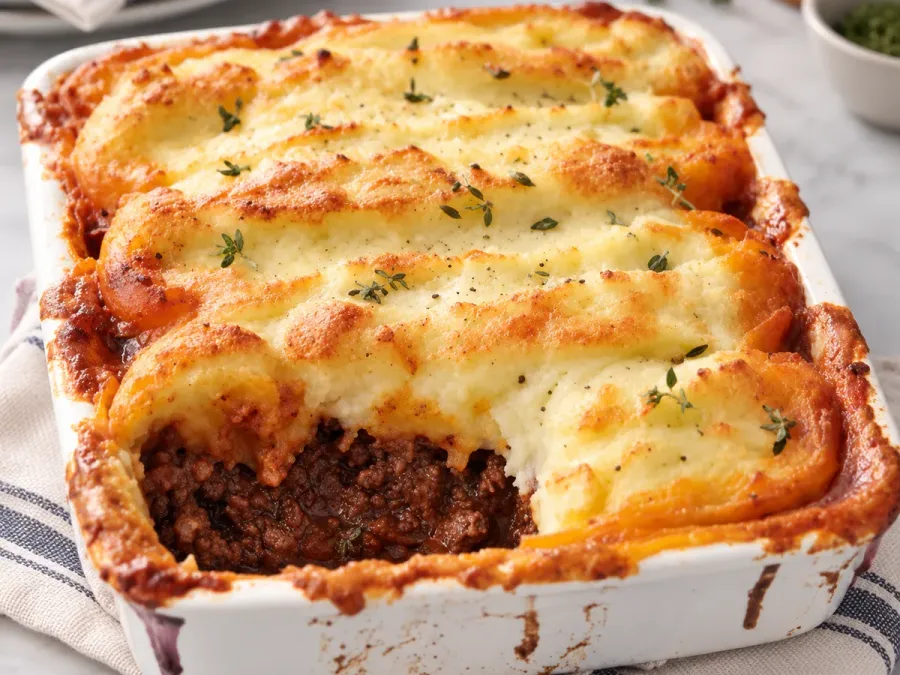
After-Thanksgiving Turkey Cottage Pie
Uses: Potatoes · Carrots · Shallots · Purple Stripe Garlic · Sage · leftover turkey (or a swap below)
Make the mash. Peel and chunk about 2 lb (900 g) of potatoes. Cover them with cold salted water, bring to a boil, and simmer for 15–20 minutes, until very tender. Drain, then mash with 3 tablespoons of butter, about ½–¾ cup of warm milk, and salt to taste. Heat the oven to 400°F while the potatoes cook.
Make the filling. In an oven-safe skillet or a regular pan, melt 2 tablespoons of butter over medium heat. Add 2 diced shallots and 2 diced carrots and cook for 6–8 minutes, until softened. Stir in 2 minced garlic cloves and about 1 tablespoon of chopped sage, and cook for 1 minute.
With leftover gravy: add 3–4 cups of chopped or shredded cooked turkey and 1½–2 cups of gravy. Heat until bubbling, loosening with a splash of broth if it’s very thick.
Without gravy: sprinkle 2 tablespoons of flour over the vegetables and stir for 1 minute. Gradually whisk in 1½ cups of broth, plus a dash of Worcestershire or soy sauce for depth. Simmer for 2–3 minutes, until thickened, then stir in the turkey.
Stir in a cup of frozen peas if you like. Transfer the filling to a baking dish (or leave it in the oven-safe skillet), spread the mash over the top, and rough up the surface with a fork so it browns. Bake for 20–25 minutes, until bubbling at the edges and golden on top. Run it under the broiler for a minute or two for extra colour.
Leftover mashed potatoes from Thanksgiving? Use those for the topping and skip the boiling. Your bin potatoes will keep.
Leftover gravy? It becomes the sauce. No gravy? Broth and a spoonful of flour do the same job.
No Turkey? Swap the Protein
No Turkey? Swap the Protein
- Cooked chicken — use it exactly as you would the turkey.
- Ground beef — brown 1 lb (450 g) in the pan first, drain off excess fat, then add the vegetables and follow the without gravy method. This is the classic cottage pie.
- Lentils — use 2 cans, drained and rinsed (or about 3 cups cooked green or brown lentils), with vegetable broth in the without gravy method.
- White beans — use 2 cans, drained and rinsed. Lightly mash a few to give the filling body, and use vegetable broth.
A note on leftover turkey: refrigerated cooked turkey is best used within 3–4 days. If the cottage pie won’t happen in time, freeze the turkey now and make the pie later.
Make it ahead: assemble the pie, cover, and refrigerate for up to a day. Bake from cold for 30–35 minutes.
About the sweet potatoes: they aren’t in the mash on purpose. This year’s roots are small, and they’re worth saving for later; see These Can Wait.
Bring This to Thanksgiving
Section titled “Bring This to Thanksgiving”If you’re heading to someone else’s Thanksgiving dinner, you don’t have to follow the three-supper plan exactly. Here are a few good ways to turn the box into something worth bringing.
Using your potatoes for Thanksgiving? Go for it. The three-supper plan is flexible, and the cottage pie is an idea, not an assignment. If your potatoes are headed for mash or scalloped potatoes, skip Supper 3 or make it later with leftover Thanksgiving mash or store-bought potatoes. Make the Thanksgiving dish you actually want to make.
Option 1 — Steakhouse-Style Garlic Mashed Potatoes
Crowd-Pleaser
Option 1 — Steakhouse-Style Garlic Mashed Potatoes
Crowd-PleaserThe strongest crowd-pleaser in the box. This style of garlic mash is rich, creamy, and party-friendly, and it’s a great way to put a meaningful amount of your Week 18 potatoes to work. It’s a natural home for the Purple Stripe garlic, too.
Recipe: Garlic Mashed Potatoes from The Stay at Home Chef
About the garlic: Purple Stripe is a hot, strong variety. If you still have Music garlic from an earlier bin and prefer a gentler garlic flavour, it’s a good choice here.
To travel: carry it in a covered dish. Mashed potatoes rewarm well in a low oven or a slow cooker on warm, with a splash of milk stirred in if they’ve thickened.
Option 2 — Classic Scalloped Potatoes
Casserole-Style
Option 2 — Classic Scalloped Potatoes
Casserole-StyleThe best casserole-style option. Scalloped potatoes are a substantial, familiar Thanksgiving side, they use a good quantity of potatoes, and they travel well in the dish they’re baked in, covered with foil.
Recipe: Scalloped Potatoes from Spend With Pennies
A shallot from the bin, thinly sliced between the layers, is a nice addition if you have one to spare.
Option 3 — Maple-Sage Roasted Carrots, Beets & Shallots
Smaller Gathering
Option 3 — Maple-Sage Roasted Carrots, Beets & Shallots
Smaller GatheringA colourful roasted side that’s best for a smaller gathering, or as one of several dishes on a bigger table. It won’t fill a large casserole, so think of it as a bright addition rather than the main event.
Use whatever carrots, beets, and shallots you have to spare. If you’re also making the curry and cottage pie, they’ll want most of the carrots, so let the beets and shallots do the heavy lifting here. Cut everything into similar-sized pieces and toss with oil, a drizzle of maple syrup, a few sage leaves, salt, and pepper. Roast at 425°F, turning once, until tender and caramelized — about 30–40 minutes. Keep the beets to one side of the pan if you don’t want pink carrots.
These Can Wait
Section titled “These Can Wait”These Can Wait
You don't need to use the potatoes, beets, kohlrabi, or sweet potatoes this week — they're good to have on hand after Thanksgiving.
Potatoes — a storage crop, so there’s no rush. In a cool, dark spot away from the shallots, they’ll keep for weeks. But Thanksgiving is a very good reason to use them now if you’d like:
- Garlic mashed potatoes — see Option 1 above.
- Scalloped potatoes — see Option 2 above.
- Crispy roast potatoes — high heat, plenty of oil, turned once.
- Boiled-and-smashed potatoes — boil small potatoes until tender, smash them lightly, and finish with butter and a few chopped sage leaves.
See the Potatoes guide for storage, roasting and mashing basics, and a crispy smashed-potato version.
Beets — with the greens removed, the roots keep about 3 weeks in the crisper. If you’re not making the roasted Thanksgiving side, roast them whenever the oven’s on anyway, or try Air Fryer Beets. See the Beets guide.
Kohlrabi — keeps up to 2 weeks in the crisper. Peel it and eat it raw in sticks, or shred it into a quick Kohlrabi Slaw. See the Kohlrabi guide.
Sweet Potatoes — a small bonus from the final harvest, dug especially for this box. They were planted late this year, so the roots will be on the small side. Freshly harvested sweet potatoes get sweeter in the weeks after harvest, so there’s no need to rush them into Thanksgiving dinner. Keep them somewhere dry and dark at room temperature — never the fridge, since cold damages them — and check them now and then. Once you’re ready, roast the small ones whole or halved. See the Sweet Potatoes guide.
Leftover sage? Chop it with a little garlic and freeze it in olive oil — see Week 16’s Sage + Garlic Freezer Cubes.
One Grocery List
Section titled “One Grocery List”Cold Springs Organics
Week 18 — October 8 & 10, 2026
This Week, Handled
- Brown-Butter Sage Gnocchi with Broccolini & Brussels Sprouts
- Golden Butternut, Carrot & Chickpea Coconut Curry
- After-Thanksgiving Turkey Cottage Pie
One Grocery List
Open this on your phone at the store.
Already in Your Bin
Beets · Lettuce Mix · Purple Stripe Garlic · Carrots · Broccolini · Potatoes · Kohlrabi · Brussels Sprouts · Butternut Squash · Shallots · Sage · Sweet Potatoes
This list covers the three suppers. Making a Bring This to Thanksgiving option? The potato dishes have their own ingredient lists in the linked recipes, and the roasted vegetable side just needs maple syrup. Designed for about 4 people. Adjust quantities for your household.
Buy This
Pasta, Grains & Bakery
Protein
Dairy
Cans, Sauces & Seasoning
Produce & Freezer
Check Your Pantry
Your checked items are saved on this device. Saved on this device only.
Do This When You Unpack
Section titled “Do This When You Unpack”About 10 minutes — or 3, if Thanksgiving dinner is tonight. Do the first four items now and the rest tomorrow.
Do This When You Unpack
A few minutes now, and the bin looks after itself through the long weekend.
- Lettuce mix: refrigerate it right away in a loosely closed bag or container lined with a dry paper towel. The towel absorbs moisture, which helps the leaves last much longer.
- Broccolini: refrigerate unwashed, in a produce bag or loosely wrapped in a damp paper towel.
- Brussels sprouts: refrigerate unwashed in the crisper. If yours are still on the stalk, leave them on — they keep noticeably longer that way.
- Wrap the sage loosely in a damp paper towel and refrigerate it in a bag, then plan to use it early. Fresh sage is at its best in the first few days. Leftovers can become freezer cubes.
- Carrots: remove the tops before refrigerating. The greens keep pulling moisture from the roots. Store the roots unwashed in the crisper.
- Beets and kohlrabi: twist or cut off any greens, then refrigerate the roots in the crisper. Fresh beet greens can be cooked like chard within a few days.
- Potatoes: store in a cool, dark, well-ventilated spot, away from light and away from the shallots — potatoes and onions make each other sprout faster.
- Sweet potatoes: store in a cool, dry spot, but not the fridge — cold makes them hard and flavourless.
- Garlic and shallots: keep together in a cool, dark, airy spot, like a basket or mesh bag. Not the fridge.
- Butternut squash: keep whole and uncut in a cool, dry spot until you’re ready to cook it — or freeze it.
Not Feeling These Meals?
Section titled “Not Feeling These Meals?”Start with the vegetable you want to use. The plan above is one easy way through the week, not a requirement. Every guide below has storage detail and more ideas.
| This week’s bin | |
|---|---|
| 🟣 | Beets — plus Air Fryer Beets |
| 🥗 | Lettuce Mix |
| 🧄 | Purple Stripe Garlic — a hot, strong variety; use leftover Music garlic if you prefer milder. See the Garlic guide |
| 🥕 | Carrots |
| 🥦 | Broccolini |
| 🥔 | Potatoes — a storage crop, no rush; ideas in These Can Wait |
| 🥒 | Kohlrabi — plus Kohlrabi Slaw |
| 🥬 | Brussels Sprouts — planted late, so a small bag this week |
| 🎃 | Butternut Squash — see the Winter Squash guide |
| 🧅 | Shallots |
| 🌿 | Sage — see Sage + Garlic Freezer Cubes |
| 🍠 | Sweet Potatoes — small, late-planted roots from the final harvest; no rush |
Or browse the full Recipe Library, including Sheet Pan Roasted Veggies for whatever’s left in the crisper next week.
That’s the 2026 Season
Section titled “That’s the 2026 Season”Thank you for eating with us this year. The storage crops in this bin will keep feeding you well into the fall, and VeggieVault stays open all winter. Every weekly guide, vegetable page, and recipe is still here whenever you need it.