Week 16 – September 24 & 26, 2026
Delivery dates: September 24 & 26, 2026
Cozy early fall, one really good Caesar. Week 16 brings Ground Cherries, Austrian Crescent Potatoes, Rainbow Swiss Chard, Broccolini, Romaine, Gladstone Onions, Sage, Acorn Squash, Eggplant, and Radishes — a fresh set of techniques after a few sheet-pan-heavy weeks, built around one exceptionally good head of romaine.
CSA Giveaway Week Is Here 🎉
Giveaway Week
CSA Giveaway Week Is Here 🎉
Giveaway WeekWe’re celebrating our CSA members with five days of giveaways this week.
Day 1 prize: Chef Ashley’s Cabbage Rolls
How to enter: place any order for extras through the Cold Springs Organics online store by 10:00 AM ET, Tuesday, September 22. Everyone who places an order before the cutoff is entered — if you’ve already placed an order for this week’s extras, you’re already in.
We’ll draw the winner after the deadline.
Watch your email each day this week for the next giveaway.
Use These First
Section titled “Use These First”Use These First
Your vegetables don't read this list. Check everything when you unpack your bin — anything very ripe, bruised, or showing signs of deterioration moves to the front of the line. This is a storage guide, not a meal order — see below for how we'd sequence the week.
First 1–3 days — Sage · Rainbow Swiss Chard · Broccolini / Broccoli · Romaine
Next — Eggplant · Radishes (trim the greens and the roots hold well beyond this)
No rush — Ground Cherries (keep them in their husks) · Austrian Crescent Potatoes · Gladstone Onions · Acorn Squash
Our suggestion: cook the whole acorn squash on Day 1 — tonight’s dinner and tomorrow’s are both handled at once. The 3-day plan below doesn’t follow this list in strict order; it’s built around that squash, and around giving the exceptional romaine its best shot for a Day 3 Caesar.
This Week, Handled
Section titled “This Week, Handled”Let us take a few decisions off your plate.
After a few sheet-pan-heavy weeks, Week 16 leans on different techniques — the stovetop, the salad bowl, and (if you want it) the air fryer. Here’s one practical way through the bin, with one grocery list. Think of it as a starting point, not an assignment — swap anything out for whatever your household actually likes.
Designed for about 4 people. Adjust quantities for your household.
Day 1: Cook the Whole Squash
Section titled “Day 1: Cook the Whole Squash”Cook the entire acorn squash tonight — not just what you need for the sauce. Part of it goes into tonight’s pasta; the rest goes in the fridge for tomorrow.
Cook Once, Use Twice
This Week's Shortcut
Cook Once, Use Twice
This Week's ShortcutCook the whole acorn squash on Day 1, using whatever method is easiest — halved and roasted, steamed, or microwaved. Use part of the cooked squash to make tonight’s creamy pasta sauce, then reserve roughly 1–2 cups of cooked squash for Day 2’s stir-fry. Tomorrow’s dinner is already half-made before you’ve started cooking it.
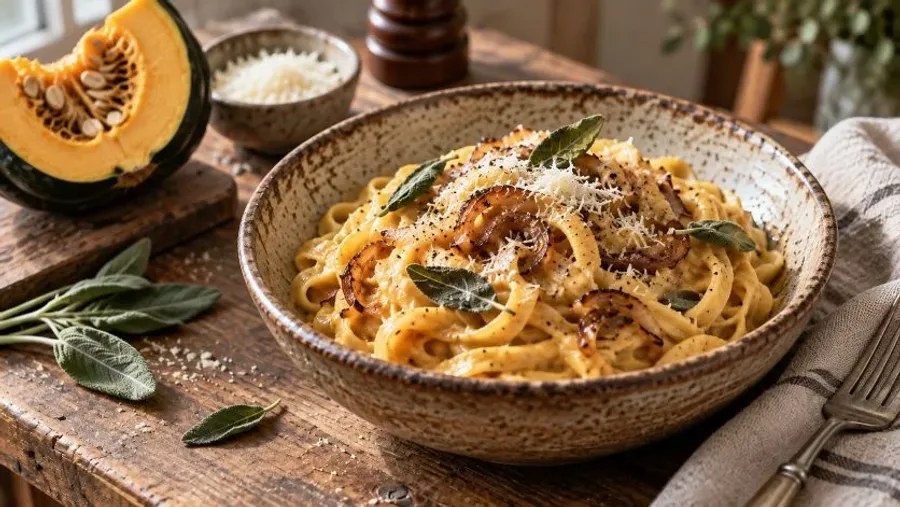
Creamy Acorn Squash, Sage & Onion Pasta
Uses: Acorn Squash · Gladstone Onion · Sage
Cook the acorn squash whole, using whatever method is simplest: halved and roasted cut-side down at 400°F for about 35–40 minutes, or steamed or microwaved if you’d rather skip the oven. While it cooks, thinly slice the Gladstone onion and cook it low and slow in butter or olive oil until soft and golden, about 10–15 minutes. Add a little chopped garlic and a few chopped sage leaves for the last minute.
Scoop the flesh out of the squash. Mash about half of it into the softened onions with a splash of pasta water, a little milk, cream, or cream cheese if you’d like it richer, and a good handful of grated Parmesan. Toss with cooked pasta and season with sea salt or kosher salt and pepper.
Before you sit down to eat: set aside the remaining cooked squash — roughly 1–2 cups — in the fridge for tomorrow.
Cook the whole squash tonight, not just what you need here — set aside 1–2 cups of cooked squash for tomorrow's stir-fry.
Day 2: Use the Squash Again
Section titled “Day 2: Use the Squash Again”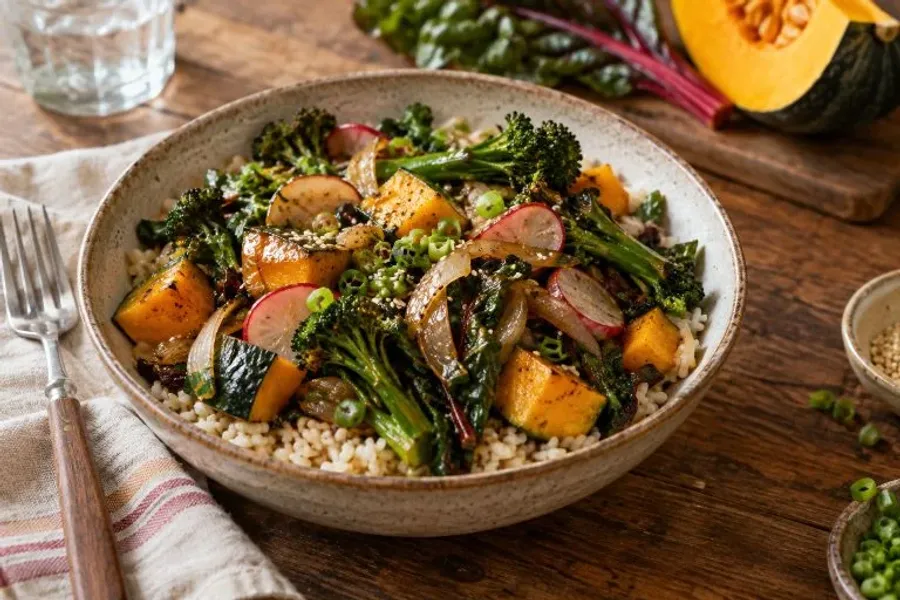
Fall Vegetable Stir-Fry
Uses: Broccolini · Rainbow Swiss Chard · Gladstone Onion · Radishes · reserved cooked Acorn Squash
Whisk together a quick sauce: soy sauce, rice vinegar, a spoonful of maple syrup or honey, and a clove of grated garlic — a splash of sesame oil and a little fresh or ground ginger too, if you have them.
Cut the broccolini into bite-size pieces, thinly slice the chard stems, and roughly chop the leaves; slice the remaining onion and radishes. Stir-fry the onion and broccolini first over high heat until just tender, then add the chard stems and radishes for a couple of minutes, then the chard leaves until wilted. Add an optional protein here — tofu, chicken, or chickpeas all work — and cook through.
Pour in the sauce, then gently fold in the reserved cooked squash just to warm it through, stirring gently so it doesn’t break apart. Serve over rice.
This is where last night's squash comes back — fold it in gently at the end so it stays tender instead of turning to mush.
Day 3: Show Off the Romaine
Section titled “Day 3: Show Off the Romaine”This week’s romaine is genuinely excellent — the Caesar is the main event, not a side note. Stored dry and cold from the start (see “Do This When You Unpack” below), it holds beautifully all the way to Day 3.
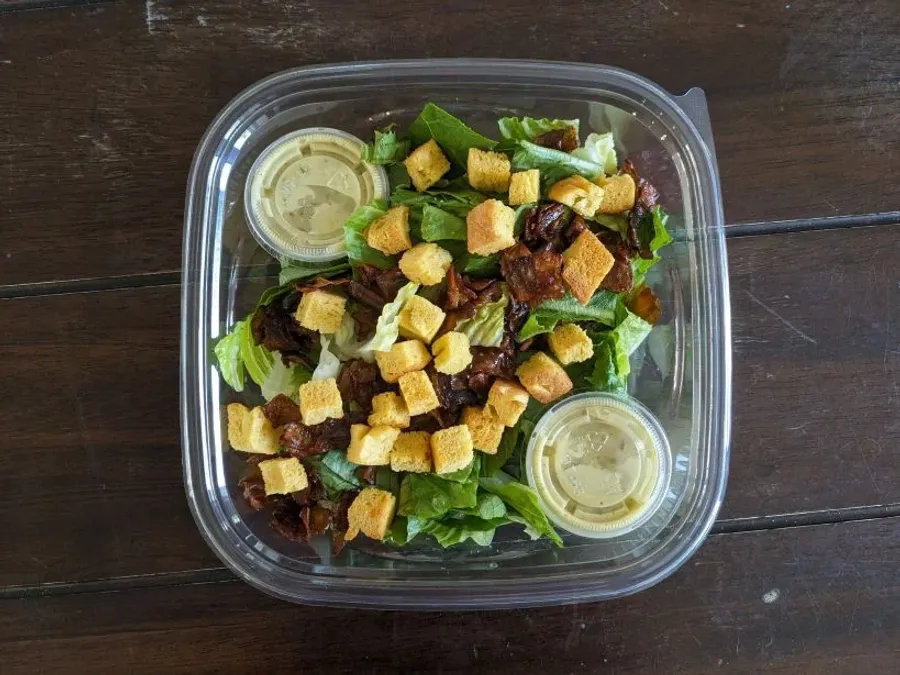
Big Farm Caesar with Crispy Eggplant & Austrian Crescent Potatoes
Uses: Romaine · Eggplant · Austrian Crescent Potatoes
Slice the Austrian Crescent potatoes into thick coins, about ⅓ inch, and cut the eggplant into cubes or planks; toss each separately with olive oil, sea salt or kosher salt, and pepper. Roast at 425°F — potatoes about 20–25 minutes, eggplant about 20 minutes — or air-fry both (see “Got an Air Fryer?” below).
While those cook, wash and dry the romaine well and tear or chop it into a big bowl. Toss with the Caesar dressing (recipe below), a generous amount of Parmesan, bacon bits, and croutons. Serve the salad alongside the roasted eggplant and potatoes, or pile everything into one big bowl for a full meal.
Radishes are optional here — thinly sliced, they add a peppery crunch if you want it, though they’re not traditional in a Caesar.
This week's romaine is exceptional — treat the Caesar as the main event, not a side salad.
Quick Caesar Dressing
Recipe
Quick Caesar Dressing
RecipeWhisk together:
- ½ cup mayonnaise
- 1 tablespoon lemon juice
- 1 teaspoon Dijon mustard
- 1 teaspoon Worcestershire sauce
- ¼ cup grated Parmesan
- 1 small clove garlic, finely grated or minced
- Black pepper, to taste
- Optional: 2–3 finely minced anchovy fillets, for a more traditional flavour
Thin with a splash of water if it’s thicker than you’d like. Taste before reaching for salt — the Parmesan, Worcestershire, bacon bits, and anchovies (if using) already bring plenty. If it needs a touch more, a pinch of sea salt or kosher salt is usually enough; otherwise adjust with more lemon for brightness or more Parmesan for depth.
Vegetarian or vegan? Use a vegetarian Worcestershire sauce, a vegan mayonnaise and Parmesan if you’d like, and skip the anchovies — they’re optional above either way. Vegan bacon bits are widely available and work well here too.
About the ground cherries: they don’t need to be worked into a meal. Husk them and eat them as a snack, pack a handful in a lunchbox, or scatter them over the Day 3 Caesar. Chef Ashley also dehydrated some into what we’ve been calling ground cherry raisins — chewy, sweet and surprisingly good.
Want to Make Ground Cherry Raisins?
Completely Optional
Want to Make Ground Cherry Raisins?
Completely Optional- Remove the husks.
- Wash and dry the ground cherries very well.
- Halve them if that helps them dry evenly.
- Lay them on a parchment-lined baking sheet.
- Use your oven’s lowest practical setting — ideally around 170–200°F.
- Dry for several hours, beginning to check around 3 hours.
- Aim for shrivelled and chewy, not wet.
- Cool completely before storing.
- Moisture levels vary, so refrigerate rather than assuming shelf stability.
See the Ground Cherries guide for more ideas.
Got an Air Fryer?
Section titled “Got an Air Fryer?” Crispy Air-Fryer Austrian Crescent Potatoes
Completely optional
Crispy Air-Fryer Austrian Crescent Potatoes
Completely optionalThis is completely optional — none of the three meals above require an air fryer. But if you have one, this is the easiest win in the bin: you’ve been getting potatoes for several weeks now, and this turns them into the kind of side dish that disappears off the pan.
- Slice the Austrian Crescent potatoes into thick coins, about ⅓ inch. Even thickness matters more than tidy edges.
- Toss lightly with olive oil and sea salt or kosher salt.
- Air fry at about 390–400°F for roughly 18–22 minutes, until golden and crisp outside and tender in the middle.
- Shake or toss the basket about every 5 minutes so they brown on more than one side.
Every machine runs a little differently — start checking around 15 minutes and go by colour and the give of a fork rather than the clock.
Make a few extra. Serve them as a side tonight, and tuck the rest into the kids’ lunches tomorrow as a surprise treat. Let them cool before they go into a lunch container — they’re good at room temperature, or reheated at home if that’s how your household eats lunch.
Still have beans from last week? Toss them lightly with oil and sea salt or kosher salt and air fry until blistered and crisp-tender, shaking the basket every few minutes.
Also great in the air fryer: Eggplant · Broccolini · Radishes — same basic method: toss with oil and sea salt or kosher salt, air fry until browned, shaking every few minutes.
Save Some for Winter
Section titled “Save Some for Winter” Save Some for Winter — Sage + Garlic Freezer Cubes
Save Some for Winter — Sage + Garlic Freezer Cubes
You’ve picked up garlic in past weeks — this is a good way to use some of what’s stacking up, alongside this week’s sage.
- Finely chop sage and garlic together.
- Portion into an ice cube tray.
- Cover with olive oil.
- Freeze promptly.
- Once solid, pop the cubes out and transfer to a freezer bag or container.
- Drop a frozen cube into winter soups, pasta, roasted potatoes, squash, or sauces whenever you want a quick flavour boost.
Food safety note: this is a freezer method only. Garlic held in oil at room temperature can grow harmful bacteria — freeze the cubes promptly and keep them frozen until you use them.
Also worth freezing this week: cooked Acorn Squash purée or cubes, and blanched Swiss Chard — both hold up well for winter soups and sides.
One Grocery List
Section titled “One Grocery List”Cold Springs Organics
Week 16 — September 24 & 26, 2026
This Week, Handled
- Creamy Acorn Squash, Sage & Onion Pasta
- Fall Vegetable Stir-Fry
- Big Farm Caesar with Crispy Eggplant & Austrian Crescent Potatoes
One Grocery List
Open this on your phone at the store.
Already in Your Bin
Ground Cherries · Austrian Crescent Potatoes · Rainbow Swiss Chard · Broccolini / Broccoli · Romaine · Gladstone Onions · Sage · Acorn Squash · Eggplant · Radishes
This list covers the three core meals. Designed for about 4 people. Adjust quantities for your household.
Buy This
Pasta & Grains
Dairy / Cheese
Bakery
Protein / Toppings
Condiments & Sauces
Check Your Pantry
Your checked items are saved on this device. Saved on this device only.
Do This When You Unpack
Section titled “Do This When You Unpack”About 10 minutes.
Do This When You Unpack
Ten minutes now makes the rest of the week easier.
- Wrap the sage loosely in a damp paper towel and refrigerate it in a bag — it’ll keep for a couple of weeks that way.
- Refrigerate the Swiss chard and broccolini right away, in the crisper — these move fastest this week.
- Give the romaine its best shot at staying crisp: refrigerate it promptly, keep it dry, and store it in the crisper drawer or a produce bag/container that lets it breathe — avoid sealing up any wet leaves. Handled this way, it holds well all the way to Day 3 for the Caesar.
- Refrigerate the eggplant in the crisper — it’ll keep for several days, no rush needed.
- Remove the radish greens before refrigerating. Twist or cut them off and store the roots separately in the crisper — the greens pull moisture from the roots and shorten their storage life. (If the greens are in good shape, they’re edible too — use them like any other peppery green.)
- Set the Austrian Crescent potatoes, Gladstone onions, and acorn squash in a cool, dark spot — not the fridge.
- Leave the ground cherries in their husks and keep them somewhere cool and dry — they hold for weeks that way, no fridge needed. Check them now and then for any that have softened. Once husked, refrigerate them and use them within a week.
Not Feeling These Meals?
Section titled “Not Feeling These Meals?”The plan above is one easy way through the week — not a requirement. If you’d rather build your own, here’s where to look:
- Ground Cherries guide
- Potatoes guide
- Swiss Chard guide
- Broccolini guide
- Lettuce Heads guide — more romaine ideas, including Caesar variations
- Onions guide
- Winter Squash guide — covers acorn squash
- Eggplant guide
- Radishes guide
- Full Recipe Library — everything else in the archive
What’s in Your Bin
Section titled “What’s in Your Bin”| Crop | |
|---|---|
| 🟡 | Ground Cherries |
| 🥔 | Austrian Crescent Potatoes — see the Potatoes guide |
| 🌈 | Rainbow Swiss Chard |
| 🥦 | Broccolini / Broccoli |
| 🥗 | Romaine — see the Lettuce Heads guide |
| 🧅 | Gladstone Onions — see the Onions guide |
| 🌿 | Sage |
| 🎃 | Acorn Squash — see the Winter Squash guide |
| 🍆 | Eggplant |
| 🌶️ | Radishes |
Crisper note
Section titled “Crisper note”Swiss chard, broccolini, romaine, radishes, and eggplant all want the high-humidity crisper — chard and broccolini are the most perishable of the bunch, so use those first; eggplant keeps a bit longer. Sage keeps best wrapped loosely in a damp paper towel, refrigerated. Ground cherries keep best left in their husks in a cool, dry spot, and Austrian Crescent potatoes, Gladstone onions, and acorn squash all prefer a cool, dark, dry spot instead of the fridge.
For full item-by-item storage detail, see each crop’s own guide linked above and in Not Feeling These Meals? — every vegetable page has a “How to Store It” section.